Where to Buy Liquidation Pallets: A Beginner’s Guide
Finding liquidation pallets for sale is not difficult. Finding inventory that fits your business, budget, experience, storage space, and resale market is the real challenge.
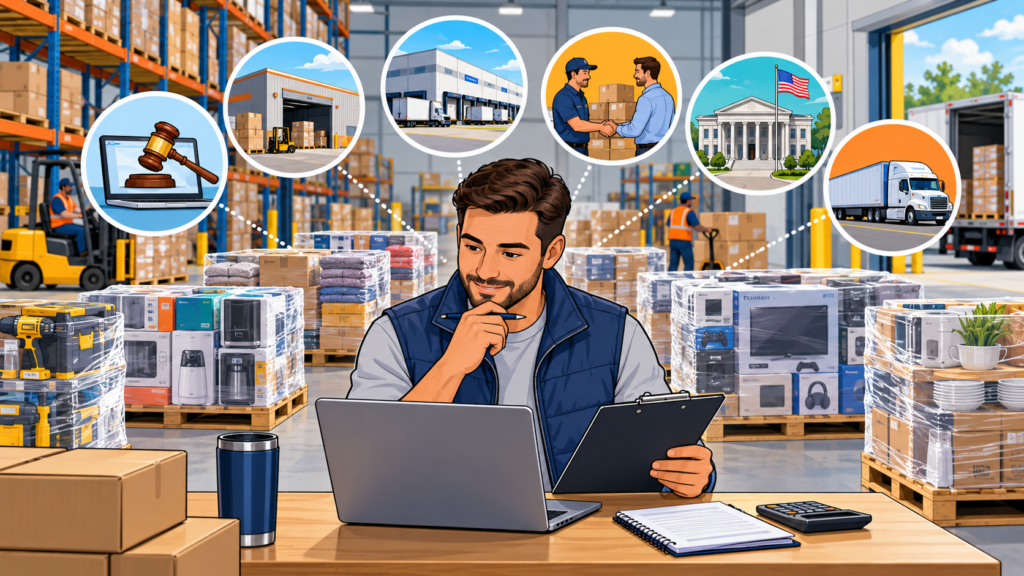
Liquidation merchandise is sold through retailer-operated marketplaces, online auctions, regional wholesalers, brokers, local warehouses, closeout companies, government auctions, and direct relationships with businesses that need to clear excess inventory.
Each source has advantages and disadvantages. Some offer detailed manifests and organized freight shipping. Others allow you to inspect merchandise locally but provide limited information about what is inside the pallet.
Before deciding where to buy liquidation pallets, you need to understand how these sourcing channels work and which one is appropriate for your resale operation.
Find Liquidation Suppliers by State
Compare regional sourcing leads, pickup options, and buying considerations in our state guides:
What Is a Liquidation Pallet?
A liquidation pallet is a bulk quantity of merchandise grouped together for wholesale sale. The inventory may come from:
- Customer returns
- Shelf pulls
- Retail overstock
- Seasonal merchandise
- Discontinued products
- Store closures
- Packaging changes
- Manufacturer excess
- Damaged-box inventory
- Refurbished products
- Freight claims
- Salvage merchandise
A pallet may contain one product category, such as tools or clothing, or a mixture of general merchandise.
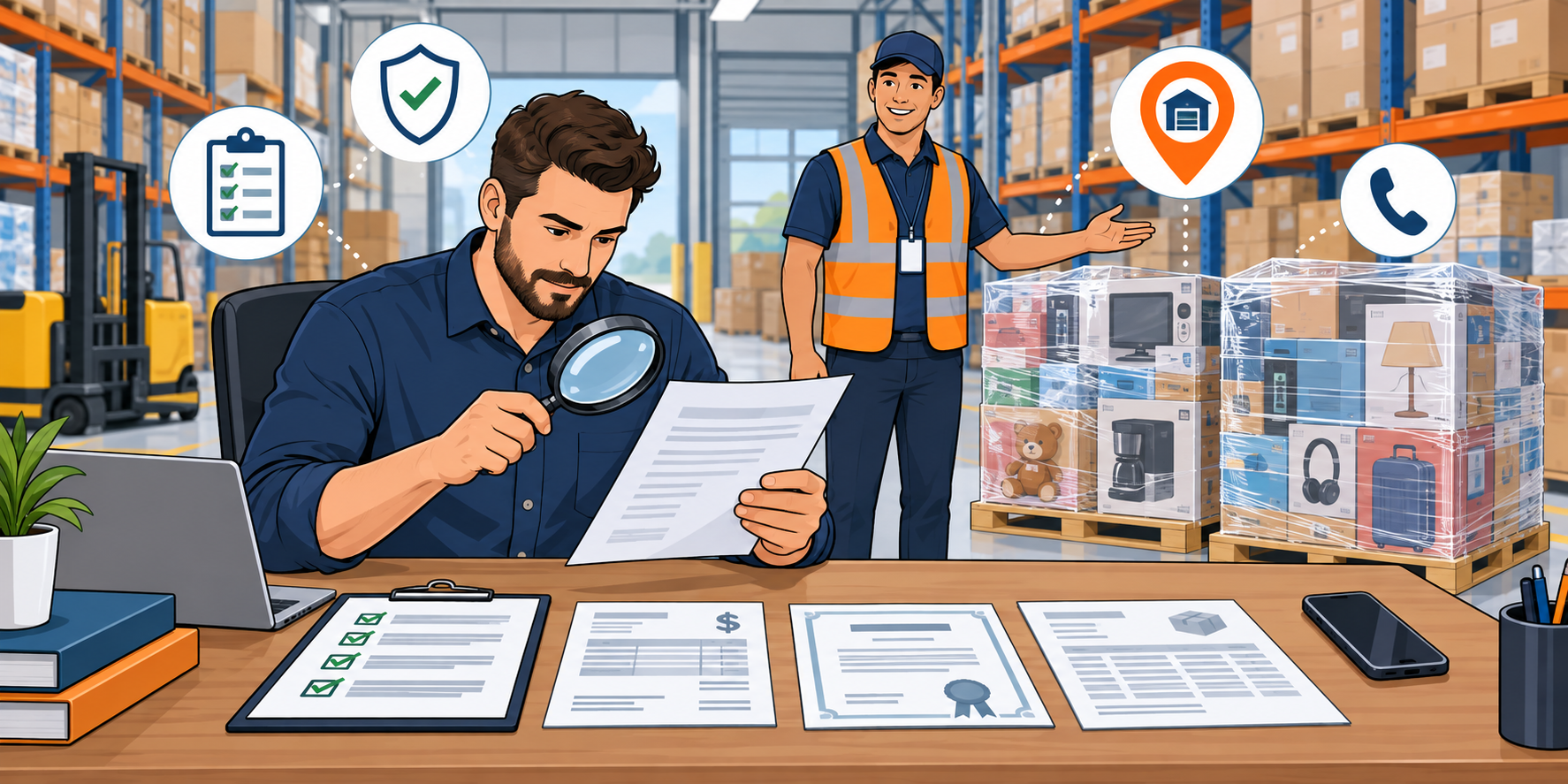
Some pallets are manifested, meaning the seller provides a list of the expected contents. Others are unmanifested and sold with little more than a general category, condition description, estimated piece count, or original retail value.
The merchandise may be new, used, incomplete, damaged, untested, or suitable only for parts. Always read the condition description and purchase terms before bidding or paying.
1. Retailer Liquidation Auction Marketplaces
Some major retailers and manufacturers sell returned and excess merchandise through business-to-business liquidation auction platforms.
Instead of purchasing from a wholesaler that already owns the goods, buyers may bid through a marketplace that manages the sale on behalf of the retailer.
B-Stock, for example, operates liquidation marketplaces offering returned, overstock, and new-condition inventory from retailers and manufacturers. Listings can range from individual pallets to multiple truckloads.
Retailer auction marketplaces may offer:
- Direct access to retailer inventory
- Pallets, less-than-truckload shipments, and truckloads
- Condition descriptions
- Original retail values
- Downloadable manifests
- Warehouse locations
- Freight estimates or shipping instructions
- Formal bidding and payment systems
However, buying directly through a retailer’s liquidation marketplace does not eliminate merchandise risk. Customer returns may be untested, damaged, incomplete, or missing accessories.
Some retailer marketplaces also have specific buyer requirements or resale restrictions. For example, buyers may need to provide a resale certificate, agree to remove labels, avoid certain sales channels, or refrain from reselling near particular stores.
Read the marketplace terms and the retailer-specific conditions before bidding.
Best suited for:
Experienced resellers who understand manifests, auction bidding, freight, and condition categories.
2. General Online Liquidation Marketplaces
General liquidation marketplaces bring together merchandise from multiple sellers, retailers, manufacturers, and asset owners.
Depending on the marketplace, inventory may be sold through:
- Timed auctions
- Fixed-price listings
- Negotiated offers
- Sealed bids
- Direct bulk sales
Liquidation.com advertises wholesale lots in package, pallet, and truckload quantities through its online auction marketplace. Direct Liquidation describes its platform as a business-to-business marketplace for manifested surplus lots sold through online auctions.
These marketplaces can offer access to many categories and shipping locations through one account. The quantity of available information, merchandise condition, claims policy, and seller responsibility may vary from listing to listing.
Do not assume that the marketplace has personally inspected every product. Review the listing terms to understand the relationship among the marketplace, merchandise owner, warehouse, and buyer.
Questions to ask before bidding:
- Who owns the inventory?
- Who created the manifest?
- Has the merchandise been inspected?
- Is the listed quantity guaranteed?
- Is the original retail value current?
- Is freight included?
- Are there buyer’s premiums or additional fees?
- What happens if the shipment differs from the listing?
- Where is the merchandise located?
- Is pickup permitted?
Best suited for:
Buyers who want access to multiple merchandise categories and are comfortable comparing auction listings.
3. Independent Liquidation Wholesalers
Independent liquidation wholesalers purchase surplus and returned merchandise from retailers, manufacturers, distributors, insurance companies, and other sources. They then resell it by the case, pallet, partial truckload, or full truckload.
A wholesaler may specialize in:
- General merchandise
- Tools and hardware
- Apparel and footwear
- Health and beauty products
- Electronics
- Appliances
- Furniture
- Grocery products
- Automotive merchandise
- Store fixtures
- Seasonal goods
Buying from an established wholesaler can be more approachable than participating in a large auction. A salesperson may be available to explain the load, discuss your resale channels, arrange freight, and recommend an appropriate starting quantity.
However, wholesalers differ significantly in experience, transparency, inventory quality, and customer service.
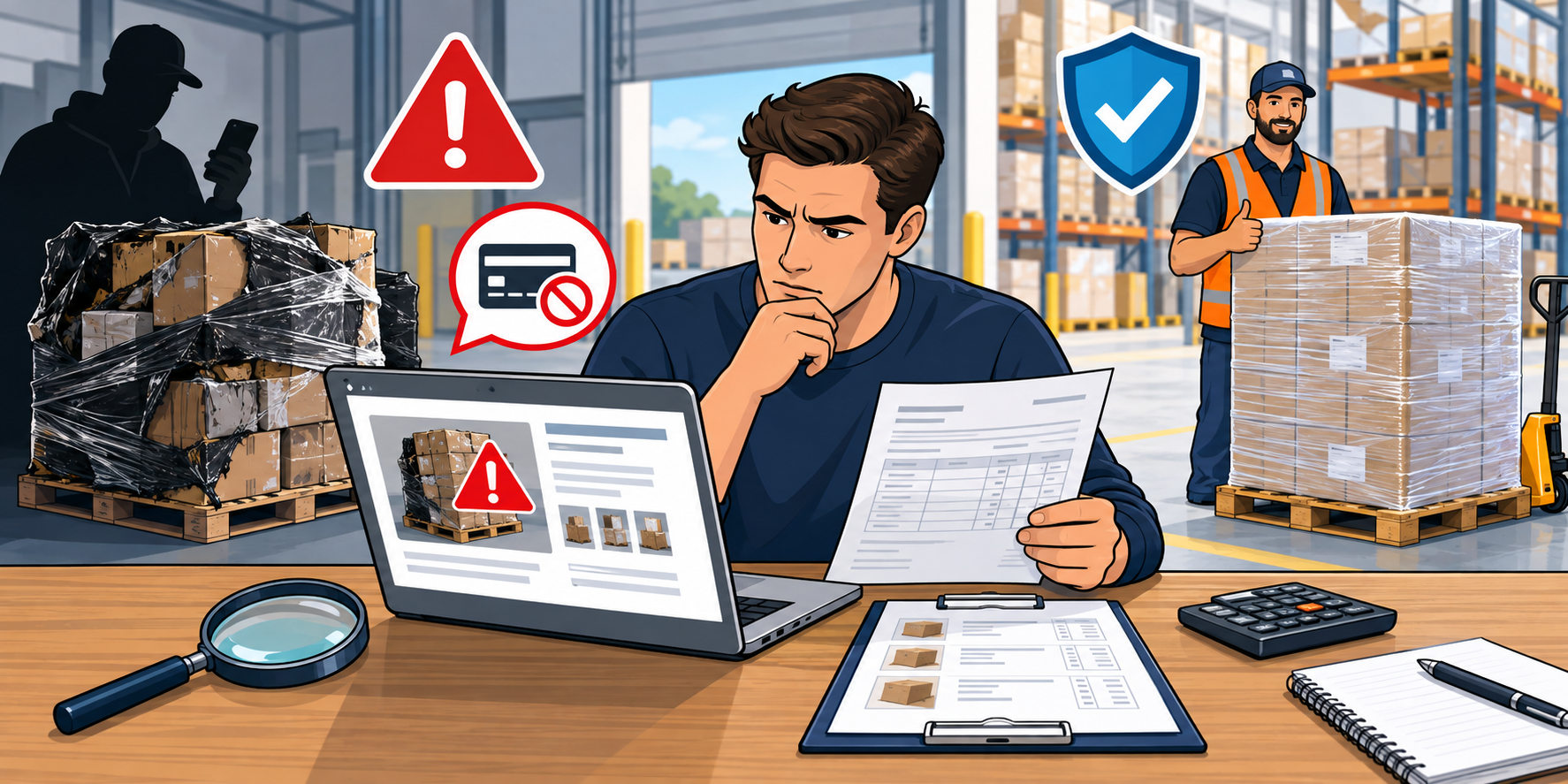
Before purchasing, verify the supplier’s business identity, warehouse location, reviews, merchandise photographs, payment information, and written terms.
Best suited for:
New and experienced resellers who want assistance selecting loads and prefer direct communication with a supplier.
4. Local Liquidation Warehouses
A local liquidation warehouse can be one of the best starting points for a new reseller.
Buying locally may allow you to:
- Inspect the merchandise before purchasing
- Avoid long-distance freight costs
- Speak directly with warehouse staff
- Start with a smaller quantity
- Pick up inventory using your own vehicle
- Build an ongoing supplier relationship
- Learn which categories are regularly available
Search online using combinations such as:
- Liquidation pallets near me
- Wholesale liquidation warehouse
- Customer return pallets
- Closeout warehouse
- Overstock merchandise
- Discount wholesaler
- Pallet liquidation
- Wholesale returns
- Salvage merchandise
You can also search surrounding cities rather than limiting yourself to your immediate area. A warehouse within a few hours’ drive may be economical when compared with commercial freight.
Visit the facility before making a large purchase whenever possible. Observe how the pallets are labeled, stored, and represented. Ask whether you may inspect or scan the merchandise and whether the pallet shown is the exact one you will receive.
Best suited for:
Beginners, local-market sellers, flea-market vendors, bin-store operators, and buyers who want to inspect merchandise before paying.
5. Liquidation Brokers
A liquidation broker connects sellers that have excess inventory with buyers who want pallets or truckloads.
The broker may not own or physically handle the merchandise. Instead, the load may ship directly from a retailer, distribution center, manufacturer, third-party warehouse, or another liquidator.
A knowledgeable broker can provide access to inventory that may not be publicly advertised. Brokers may also help buyers locate specific categories, quantities, retailers, or shipping regions.
However, buyers must understand the broker’s role.
Ask:
- Does the broker own the merchandise?
- Who is the seller of record?
- Where is the inventory located?
- Who created the manifest?
- Who receives the payment?
- Who is responsible if the shipment is incorrect?
- Can the broker document its authority to offer the load?
- Is the broker’s commission included in the price?
- Will the invoice come from the broker or merchandise owner?
A legitimate broker should not misrepresent itself as the inventory owner or warehouse operator.
Best suited for:
Established buyers looking for repeat truckloads, specialized categories, or inventory in particular shipping regions.
6. Closeout and Overstock Suppliers
Not all discounted wholesale merchandise comes from customer returns.
Closeout and overstock suppliers may offer:
- Discontinued products
- Excess production
- Packaging changes
- Seasonal leftovers
- Cancelled orders
- Retailer overstocks
- Manufacturer surplus
- Store-closing inventory
- Slow-moving products
Closeout merchandise can sometimes be easier to resell than customer returns because the products may be new and consistent. A buyer might receive cases or pallets containing the same SKU rather than hundreds of different products.
The challenge is demand. Even new merchandise can be a poor investment if the product is outdated, highly seasonal, restricted, or difficult to sell.
Research current resale prices and sales velocity before buying large quantities of a single product.
Best suited for:
Retail stores, online sellers, flea-market vendors, exporters, and resellers who prefer new or consistent inventory.
7. Local Retailers and Independent Stores
Small retailers occasionally need to clear:
- Old inventory
- Customer returns
- Damaged packaging
- Seasonal leftovers
- Display models
- Discontinued products
- Store fixtures
- Closing inventory
Contact store owners, regional chains, hardware stores, furniture stores, appliance dealers, farm-supply businesses, and specialty retailers in your area.
Explain what types of merchandise you purchase and whether you can provide regular pickup.
A small retailer may not generate full pallets every week, but several local relationships can develop into a reliable sourcing route.
Put the agreement in writing and clarify:
- What merchandise is included
- How often inventory will be collected
- Whether any items must be destroyed
- Whether labels must be removed
- Who is responsible for recalled or hazardous products
- How pricing will be determined
- Whether the merchandise can be resold online
Best suited for:
Local resellers who can pick up inventory and develop direct business relationships.
8. Manufacturers and Distributors
Manufacturers and distributors sometimes have excess inventory resulting from:
- Forecasting errors
- Cancelled purchase orders
- Packaging changes
- Product updates
- Minor cosmetic defects
- Production overruns
- Discontinued lines
- Warehouse consolidation
Direct manufacturer opportunities can produce consistent merchandise and attractive pricing, but they are often relationship-driven.
The supplier may require:
- Minimum-order quantities
- Business references
- A resale certificate
- Proof of an established resale operation
- Pallet or truckload purchases
- Brand-protection agreements
- Export restrictions
- Approved sales channels
Prepare a short business introduction explaining what you sell, where you sell it, the quantity you can purchase, and how quickly you can remove inventory.
Best suited for:
Established resellers capable of purchasing consistent case, pallet, or truckload quantities.
9. Government and Municipal Surplus Auctions
Federal, state, county, city, school, and public-agency auctions can be another source of surplus inventory and equipment.
Government surplus may include:
- Office furniture
- Computers
- Tools
- Maintenance equipment
- Vehicles
- Restaurant equipment
- School furniture
- Electronics
- Seized property
- Unclaimed property
- Bulk lots of miscellaneous supplies
USA.gov maintains information about government auctions involving excess and seized property. GovDeals operates an online marketplace used by government, educational, and related entities to sell surplus assets to the public.
Government surplus is usually sold as-is and may require local pickup. Inspection periods, removal deadlines, taxes, buyer fees, and loading arrangements vary by seller.
These auctions are not limited to traditional retail pallets, but they can provide profitable inventory for buyers with specialized knowledge.
Best suited for:
Buyers interested in equipment, furniture, electronics, vehicles, fixtures, and unusual local inventory.
10. Business Liquidation and Store-Closing Auctions
When a retailer, restaurant, warehouse, or other company closes, its inventory and equipment may be sold by an auctioneer or business-liquidation company.
These sales may include:
- Retail inventory
- Shelving
- Shopping carts
- Pallet racking
- Refrigeration
- Display cases
- Office equipment
- Warehouse equipment
- Packaging supplies
- Point-of-sale equipment
Search auction platforms and local auctioneers for terms such as:
- Business liquidation
- Store-closing auction
- Commercial auction
- Warehouse liquidation
- Retail inventory auction
- Restaurant equipment auction
Visit the inspection when one is offered. Business-liquidation auctions often require buyers to remove purchases within a short period and may not provide labor, loading equipment, or shipping.
Best suited for:
Local buyers with transportation, storage, and the ability to remove merchandise quickly.
11. Freight, Insurance, and Salvage Sources
Damaged freight, refused shipments, freight claims, and insurance-related merchandise may be offered through specialized salvage companies and auctions.
This inventory can include:
- Damaged packaging
- Water-exposed goods
- Freight-damaged products
- Refused deliveries
- Unclaimed shipments
- Products from insured losses
- Merchandise suitable only for parts
Salvage inventory requires careful inspection. Some products
Your Next Pallet Purchase Starts With Better Preparation.
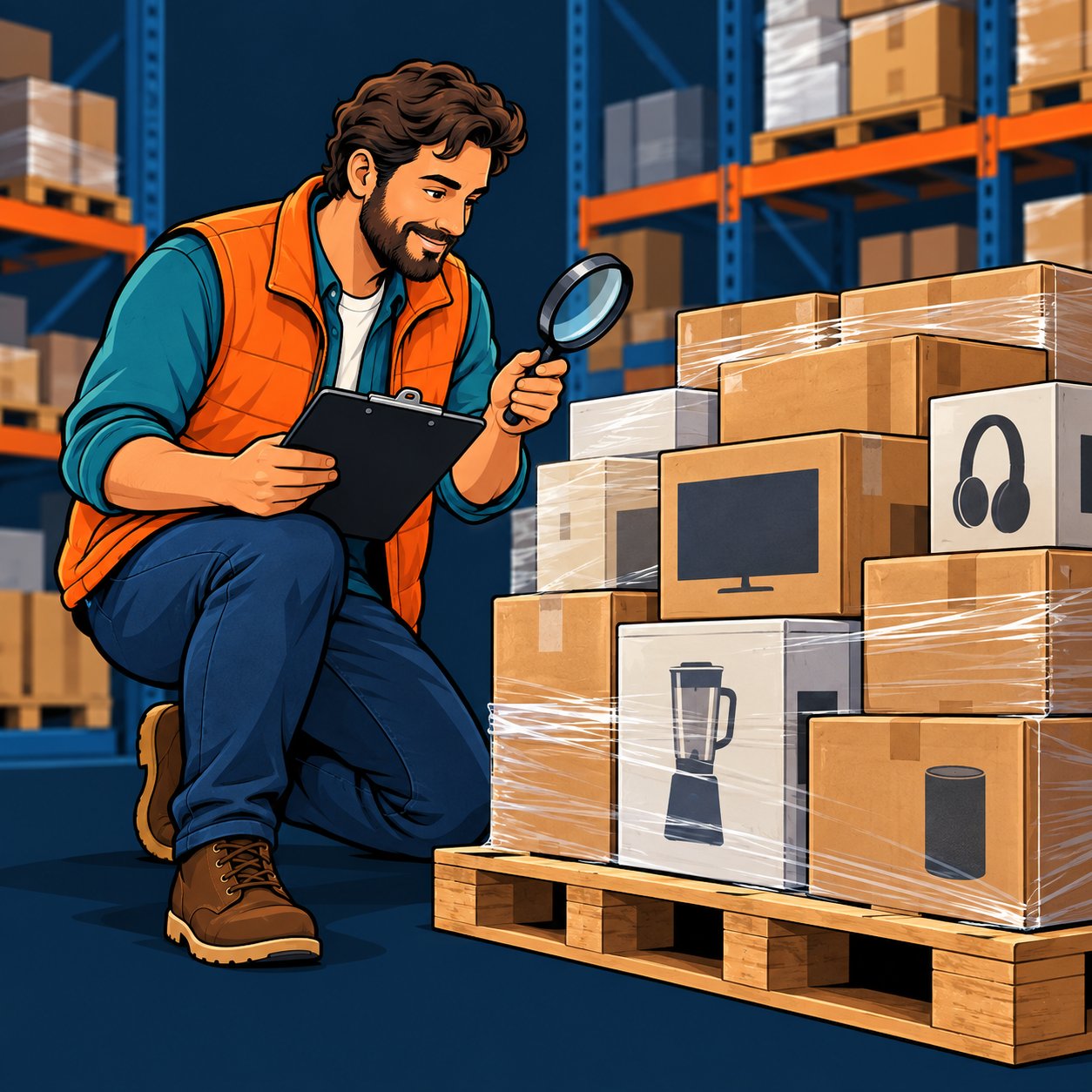
Learn how to evaluate suppliers, understand merchandise conditions, and review liquidation manifests. Sign up for the FREE Buyer Academy and complete the lessons before your next purchase.
Already enrolled? Keep going—complete your training before you buy.

Rob has been involved in the liquidation and secondary-market industry since 2002. Over the course of his career, he has brokered and exported liquidation pallets and truckloads of merchandise throughout the United States and has worked extensively with closeouts, shelf pulls, customer returns, and other secondary-market inventory.