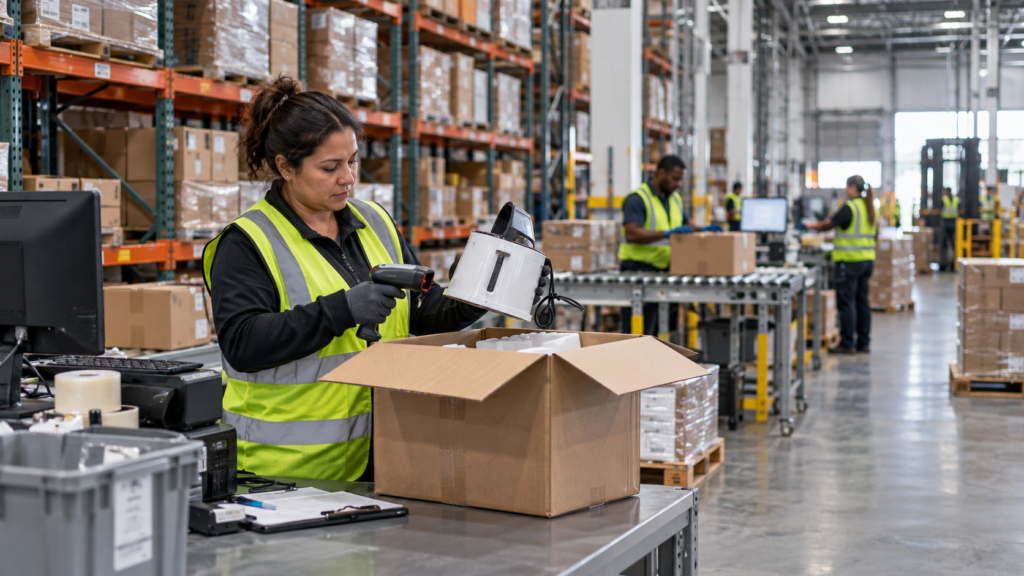
Featured image: AI-generated reverse-logistics warehouse illustration; not an actual GENCO or FedEx facility.
If you remember GENCO as a name in returns processing and liquidation, you may be wondering why you no longer see it the way you once did.
GENCO was acquired by FedEx in January 2015 and rebranded as FedEx Supply Chain in 2017. Its disappearance as a familiar brand reflects a change in ownership and identity. The documented history points to an acquisition and integration, rather than a company simply shutting its doors.
There is also a more recent chapter: in July 2026, CMA CGM announced an agreement to acquire FedEx Supply Chain. Here is how those developments fit together—and what liquidation buyers should take from the story.
What Was GENCO?
GENCO Distribution System, Inc. was a major third-party logistics provider. Its work went well beyond moving freight: it helped businesses manage merchandise throughout its life cycle, including products coming back from customers.
In its December 2014 acquisition announcement, FedEx described GENCO as a leader in reverse logistics whose services included returns processing, testing, repair, remarketing, product liquidation and recycling.
FedEx said GENCO was processing more than 600 million returned items annually at that time. That is a historical figure from the announcement, not a claim about its current volume.
For resellers, the liquidation part of that business is especially relevant. Reverse logistics covers the decisions and handling that occur after merchandise comes back. Some items can be repaired or returned to stock; others may enter resale or liquidation channels.
FedEx Completed the GENCO Acquisition in 2015
FedEx announced its agreement to buy GENCO on December 15, 2014. It then confirmed that the acquisition closed on January 30, 2015.
The closing announcement said GENCO would operate as a FedEx subsidiary, with Todd R. Peters continuing as CEO. Its financial results would initially be reported through the FedEx Ground business segment.
The purpose was to broaden FedEx’s logistics services alongside its transportation network. For a retailer, handling the delivery of an order and managing the return are related needs. GENCO added capabilities on the returns and supply-chain side.
The contemporary Logistics Management report, “FedEx acquisition of GENCO is a done deal,” also covered the completed transaction.
Why Did the GENCO Name Disappear?
The next important step was branding. FedEx’s 2017 annual report explicitly states that GENCO was rebranded as FedEx Supply Chain. The report also records the 2015 purchase price as $1.4 billion.
That explains why a search for the old GENCO logistics business leads to a different name. The operations became part of a larger corporate organization, and the customer-facing identity changed.
A brand change does not establish that every former warehouse, buyer program, website or commercial relationship continued unchanged. Those are separate questions. An old supplier listing can describe the company accurately for its time while offering little guidance about how to do business with it today.
The 2026 Update: An Agreement With CMA CGM
On July 1, 2026, CMA CGM and FedEx announced an agreement for CMA CGM to acquire FedEx Supply Chain at an enterprise value of $1.4 billion.
The announcement described plans to expand the North American contract-logistics operations of CMA CGM subsidiary CEVA Logistics. It said the transaction was expected to close in 2026, subject to customary regulatory approvals.
An announced agreement is different from a completed acquisition. In the sources reviewed for this article on September 29, 2026, we did not locate a separate confirmation that this transaction had closed. We therefore describe the CMA CGM transaction as an announced sale agreement.
Can Resellers Still Buy GENCO Liquidation Loads?
The corporate history alone does not answer that question. These acquisition announcements do not establish a current public buying program for small resellers, nor do they verify a seller advertising “GENCO loads.”
If you encounter that description, ask the seller to explain precisely what it means. Is it identifying a historical source, a warehouse processor, or the company actually selling you the merchandise?
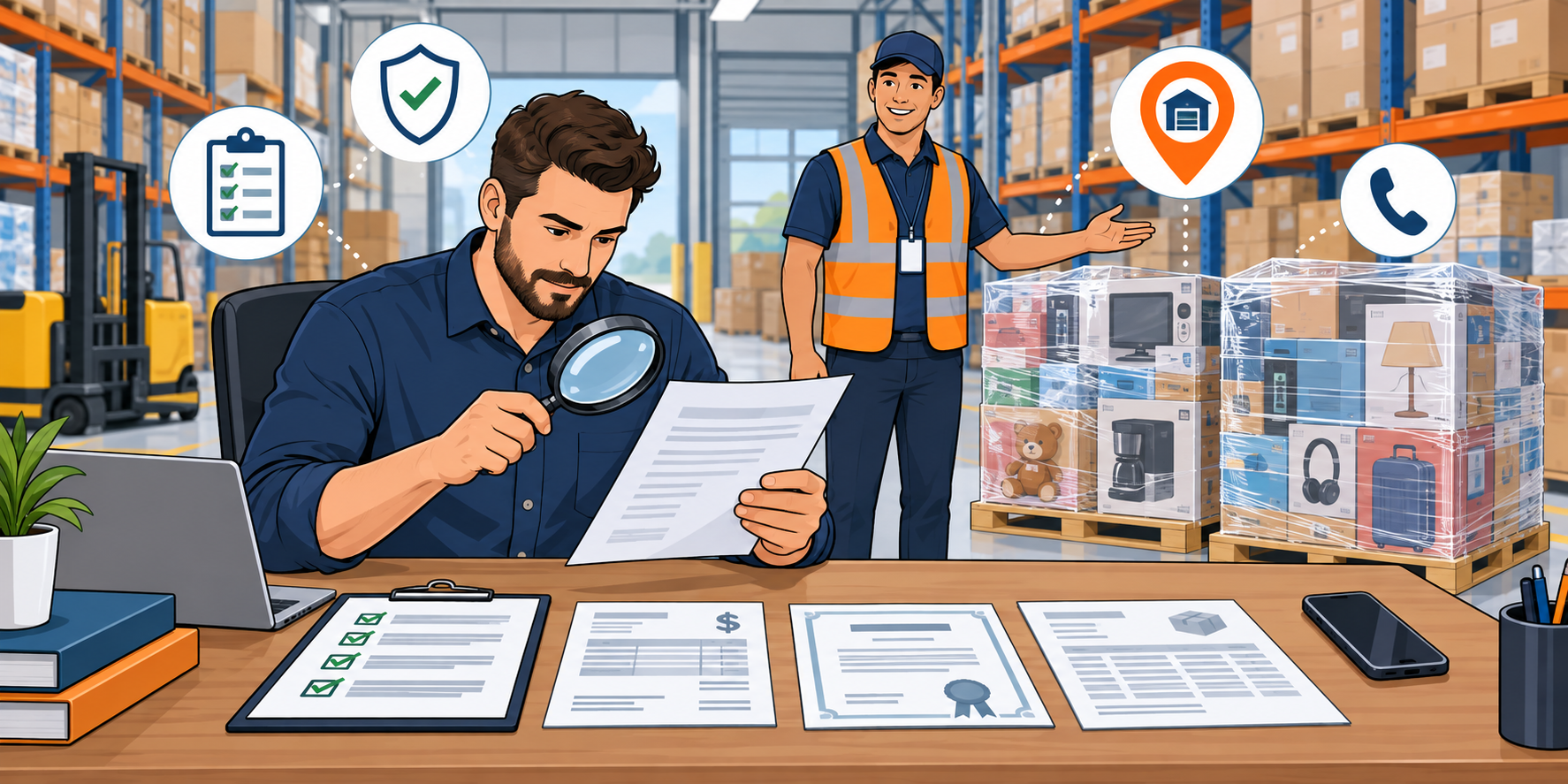
Before paying for inventory, confirm:
- The seller’s identity: Who will appear on the invoice, receive your payment and handle a claim?
- The inventory: What merchandise, quantities and condition grades are included?
- The terms: What are the inspection rights, discrepancy deadlines and restrictions on resale?
- The landed cost: What will the load cost after freight, fees and unloading?
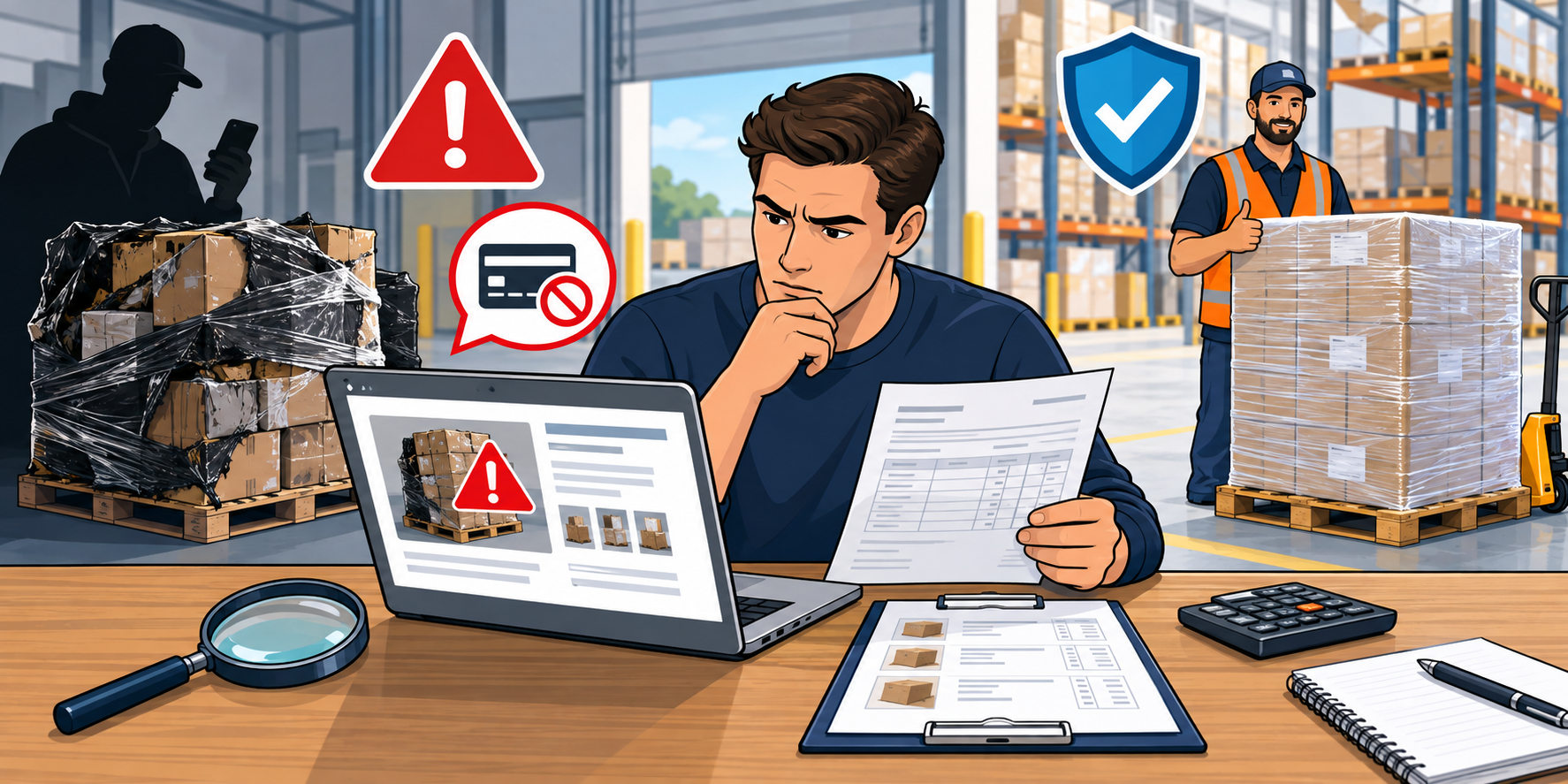
Our guide to vetting liquidation suppliers can help structure those checks. You should also read the manifest carefully rather than relying on a recognizable company name.
What GENCO’s Story Means for Liquidation Buyers
The practical lesson is that the supply chain changes. Companies are acquired, brands are retired and business relationships evolve. Your buying decisions need to reflect the inventory and terms available now.
A well-known historical source does not tell you how much of a load will be sellable in your market. Product condition, missing components, demand, selling fees and processing time all affect the outcome. Use a complete liquidation pallet profit calculation before deciding what you can afford to pay.
Whether you sell through Amazon, eBay, Facebook Marketplace, Whatnot or a local store, the question remains the same: what can this specific inventory realistically earn after all your costs?
For more help evaluating loads and suppliers, explore the FREE Liquidation Buyer Academy.
Research reviewed September 29, 2026. Historical figures are identified by their source dates. The 2026 sale agreement is reported separately from the completed 2015 acquisition.

Your Next Pallet Purchase Starts With Better Preparation.
Learn how to evaluate suppliers, understand merchandise conditions, and review liquidation manifests. Sign up for the FREE Buyer Academy and complete the lessons before your next purchase.
Already enrolled? Keep going—complete your training before you buy.

Rob has been involved in the liquidation and secondary-market industry since 2002. Over the course of his career, he has brokered and exported liquidation pallets and truckloads of merchandise throughout the United States and has worked extensively with closeouts, shelf pulls, customer returns, and other secondary-market inventory.